

About
Every week, American-owned ships and barges deliver the food, fuel, and goods that Alaska’s residents and businesses need. Crews sail these ships and show up year-round, in all conditions, in good times and times of crisis, serving all corners of our state with unmatched consistency.
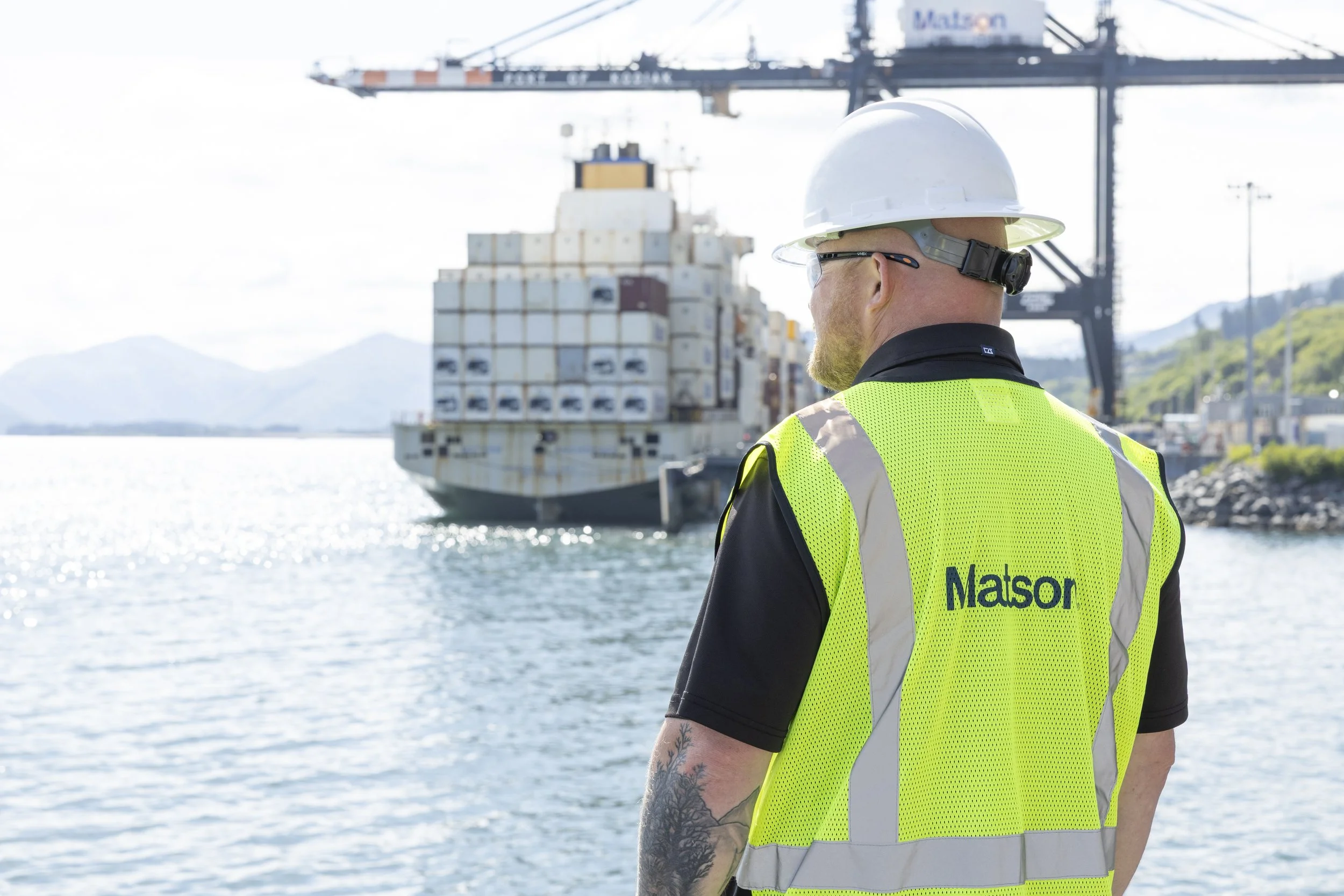
Alaska’s maritime shipping industry knows it’s not just about delivering cargo; it’s about reliably getting Alaskans what they need.
Local, American maritime professionals are experts on Alaska waterways, ports, and communities, and understand what needs to be done to ensure every community they serve has consistent and dependable access, whether they live in Anchorage, Fairbanks or Juneau.
Frequently Asked Questions
-
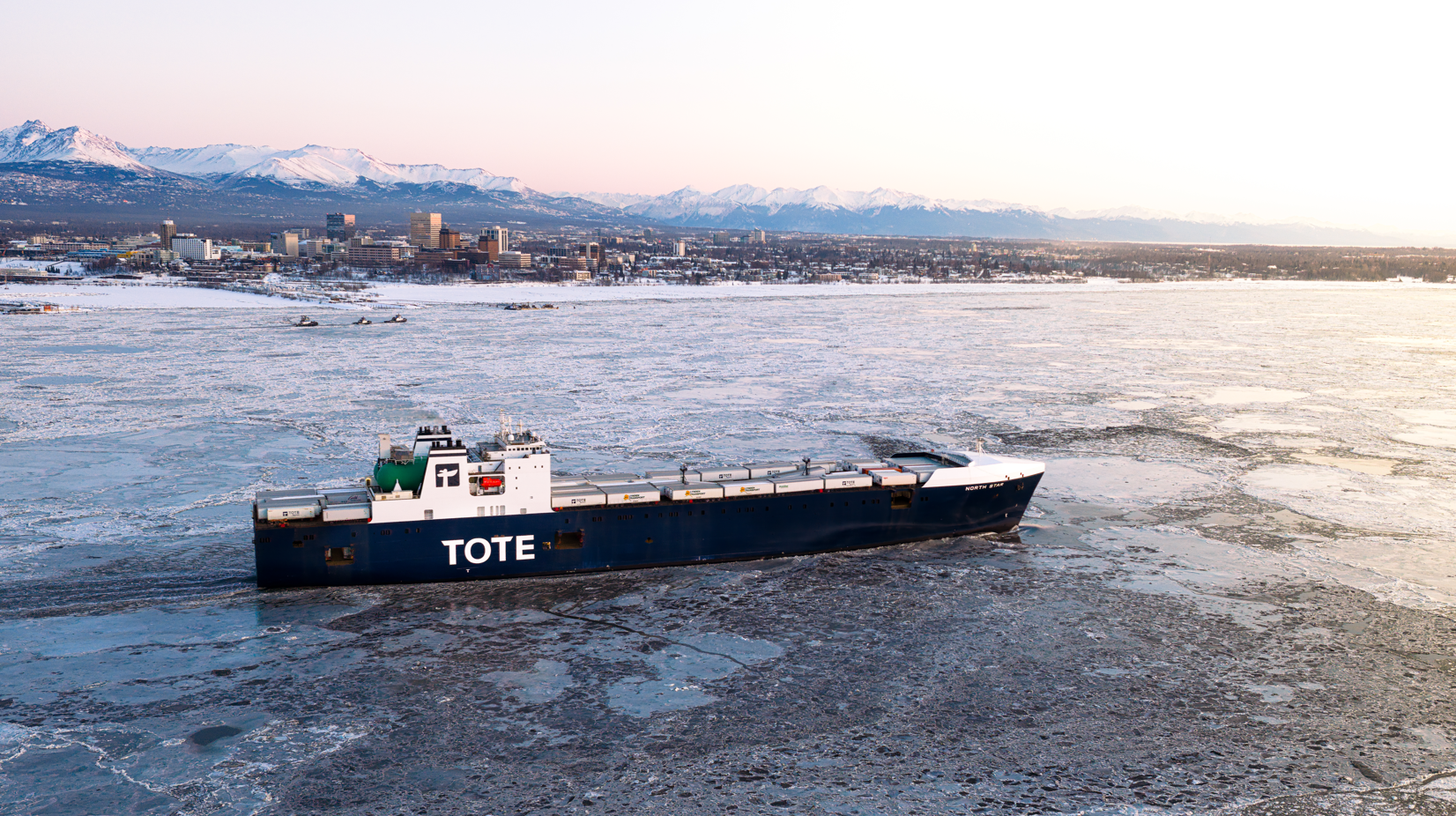
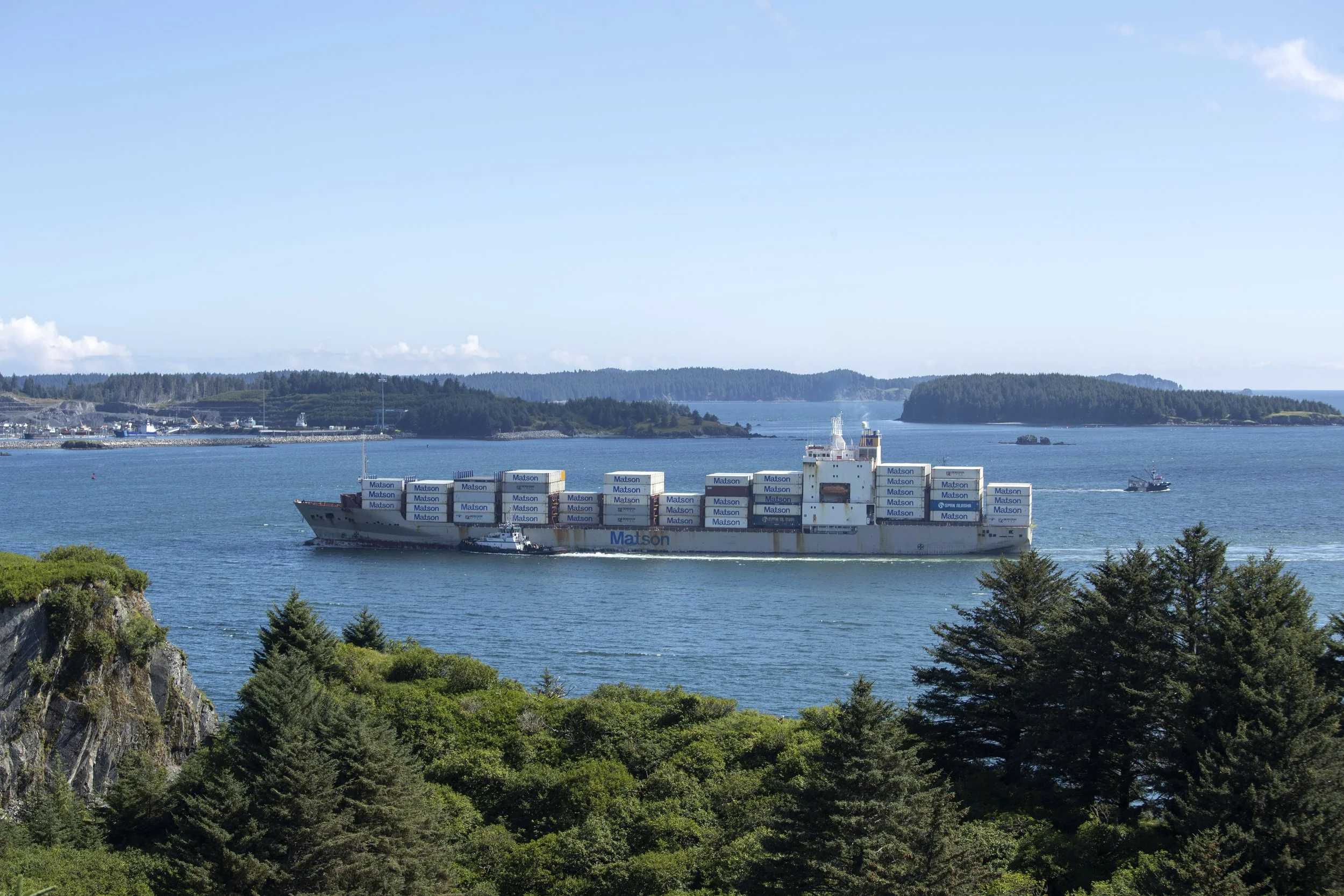
Alaska’s maritime shipping industry is made up of the people, companies, and vessels that move goods by water from the Lower 48 to Alaska’s ports and communities. These American-owned companies — TOTE, Matson, Lynden / Alaska Marine Lines, Fairwater, Crowley and Samson Tug and Barge — and their American crews have decades of experience working in Alaska’s waterways under stringent U.S. environmental and labor laws. They reliably operate everything from container ships to tugboats and fuel barges, bringing necessary goods to ports and remote communities across the state.
In addition to the vessels, the maritime industry in Alaska has hundreds of people and dozens of companies providing essential shoreside services — such as stevedoring, trucking and logistics — that reliably move cargo from ships to our stores and homes. Ship repair and maintenance companies such as JAG Marine keep the fleets of private, U.S. Coast Guard and NOAA vessels safe and operational for Alaska’s challenging climate.
-
The maritime shipping industry provides exceptional career opportunities for anyone who enjoys dynamic work outside of the traditional “9-to-5” office environment. Whether you’re looking for the adventure of a career onboard a vessel or prefer to stay closer to home, the maritime shipping industry in Alaska supports a wide range of job opportunities at all skill levels. Onboard, careers range from entry-level deckhand positions to ship operators, engineers, captains and ship pilots. Onshore, jobs are available in handling and transporting cargo, logistics, port operations and ship repair and maintenance, to name a few.
Training for the maritime shipping industry can begin in-state at the Alaska Maritime Training Center in Seward, which offers U.S. Coast Guard-compliant training. Entry-level training for a career as a U.S. Merchant Mariner is available to Alaskans at the Seafarers International Union’s Paul Hall Center for Maritime Training and Education. Maritime Academies, such as the California Maritime Academy, offer four-year degree programs for careers both onboard and onshore.
Pay can range from $35,000-$55,000 for ordinary seaman (entry-level crew) up to more than $200,000 for a ship captain, not including benefits.
More information about the range of maritime career opportunities in Alaska can be found at the Alaska Maritime Education Consortium.
-
Numerous federal agencies regulate maritime shipping in Alaska, including the U.S. Coast Guard, the U.S. Environmental Protection Agency and Maritime Administration (MARAD) at U.S. Department of Transportation, all of which aim to keep Alaska’s supply chain, pristine waters and maritime workers safe. Additionally, federal law requires that any vessels transporting goods between U.S. destinations (such as between the Lower 48 and Alaska) must be built in America, owned and operated by American companies and crewed by American citizens. This means the supply chain to Alaska from the Lower 48 is protected from disruption by foreign-owned companies operating outside U.S. labor and environmental laws.
-
The sheer size of Alaska, coupled with our weather and distance from the Lower 48 makes getting the goods Alaskans need more challenging than in other states. Maritime shipping is the most efficient and dependable method of transporting goods to Alaska; as a result, 90% of what’s needed for daily life — food, fuel and consumer goods — arrives in Alaska by ship or barge. These vessels operate on regular, reliable schedules year-round that Alaska residents can count on.
But that’s not the end of the story. Nearly every major industry in our state — tourism, fishing, oil and natural gas, mining and timber, to name a few — all rely on the maritime shipping industry to dependably deliver the supplies they need to operate, and in many cases, bring their products to world markets. For residents and local businesses, the maritime shipping industry is Alaska’s economic lifeline.